Overview
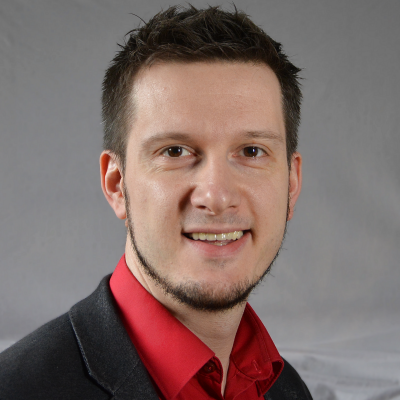
Hi, I’m Dr. rer. nat. Dipl.-Inform. Stefan Heinrich, a scholar and IT tinkerer from Germany, currently appointed as associate professor of the Data Science Section at IT University of Copenhagen and affiliate researcher at Pioneer Centre for Artificial Intelligence. These are what I consider my key skills and experiences in a nutshell:
- Extensive experience in scientific research in the fields of Computer Science, Cognitive Psychology, and Computational Neuroscience, with Master and PhD degrees
- Fifteen years of academic research in Computational Modelling, Natural Language Processing, and Machine Learning — current focus on Temporal Dynamics, Probabilistic Neural Models, Neurodiversity and Representation Learning
- Thirteen years of teaching at undergraduate and postgraduate levels in Artificial Intelligence, Machine Learning, Computational Modelling, and Human–Robot Interaction, as well as supervision of more than 50 PhD, MSc, and BSc theses
- Coordination and formation of research groups, student teams, and lab environments, for short- to long-term projects
- Resourceful, creative, goal-oriented, organised, independent, and an effective team player and team builder
Research Interests and Background
My research interest is located at the intersection of artificial intelligence, cognitive psychology, and computational neuroscience, where I study how representations emerge and give rise to function in biological and artificial systems. Here, I aim to understand principles underlying representation learning as a unifying framework for understanding structure, abstraction, and generalisation in cognition and in AI. In particular, I study the processes and mechanisms in the brain and in computational models that form representations through spatial and temporal composition and decomposition, as well as through multimodal integration. My goal is to uncover how such representations arise from structural and geometric symmetries, how they enable behaviour, learning, and reasoning, and how individual differences and neurodiversity shape them. As a central approach, I develop computational cognitive models in the form of artificial neural systems with plausible mechanisms and probabilistic learning dynamics, focused on tasks and phenomena in reasoning, natural language processing, cognitive development, and biosignal inference. Understanding these representational mechanisms and processes provides inductive biases for machine learning and AI systems and yields priors and markers for cognitive science in models of compositionality, disentanglement, generation, and prediction.